
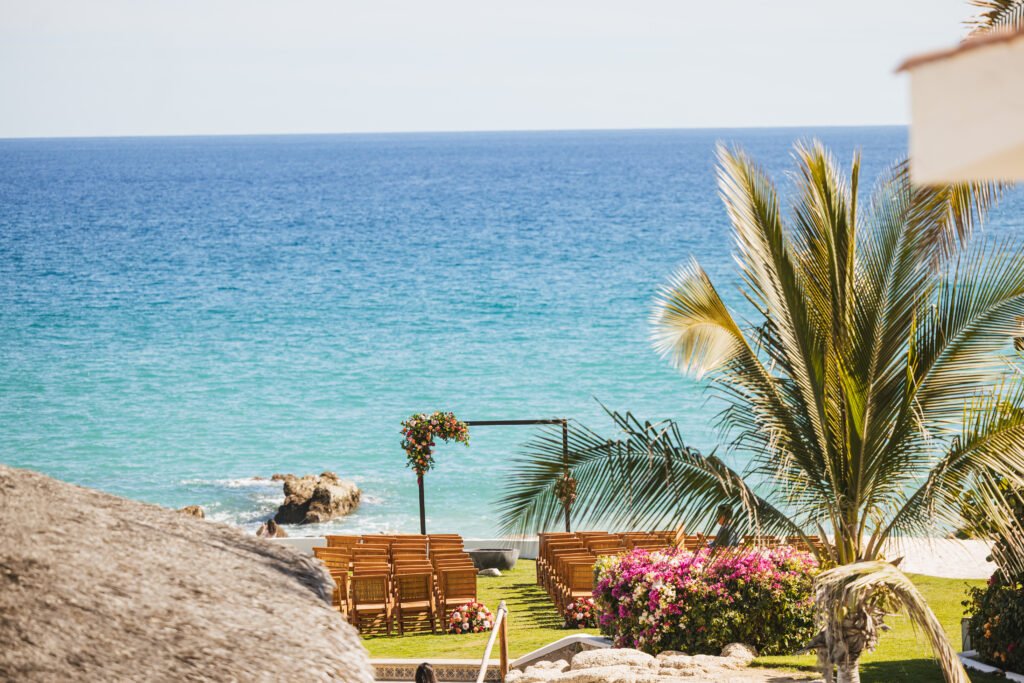
One of the first surprises couples meet when planning a destination wedding in Mexico is this: the ceremony you dream about and the legal marriage are often two separate moments. Understanding the difference early turns a confusing detail into one of the easiest decisions of your planning, and it opens up beautiful possibilities for the day itself.
What makes a marriage legal in Mexico
What the law says
In Mexico, only a civil ceremony performed by a Civil Registry official, the Registro Civil, is legally recognized. Religious and spiritual ceremonies are deeply meaningful, but they carry no legal effect on their own. A legally recognized marriage in Mexico must comply with the requirements established by the appropriate Civil Registry. Documentation, administrative procedures, and additional requirements may vary depending on the state, municipality, and circumstances of the couple. For weddings in Los Cabos, couples should confirm the current requirements directly with the relevant Civil Registry in Baja California Sur before making arrangements.
What international couples can expect
Every couple’s situation is different
Our couples arrive from many countries, and there is no single checklist that fits everyone. The documents and procedures for a legal marriage in Mexico can depend on each partner’s nationality, country of birth, the country where official documents were issued, current marital status, and the requirements of the Civil Registry in the state and municipality where the marriage will take place. Depending on the applicable requirements, foreign-issued documents may need an apostille, legalization, or a certified Spanish translation.
As the official authority for marriages in Los Cabos, the Civil Registry of Baja California Sur publishes its current requirements on its website, and this published guidance is the reference to consult. Its list for marriages involving a foreign citizen currently includes a completed marriage application, updated original birth certificates apostilled and translated into Spanish by a court-authorized translator, official identification and passport, a certificate confirming no existing marriage, prenuptial medical analyses issued by the local health center with a 15-day validity, and four adult witnesses with photo identification, with documentation presented in advance of the scheduled date. This is the Registry’s published guidance, and each international couple’s circumstances are reviewed individually, so treat it as the starting point for a direct confirmation, never as a universal checklist. The published general list also includes a reference to the CURP, Mexico’s population-registry code; in our practical experience planning legal ceremonies in Los Cabos, foreign couples are not asked to provide one. This reflects our planning experience rather than independently verified legal guidance; which requirements apply to your marriage is confirmed individually with the Registry before any paperwork begins.
Why many couples choose the symbolic path
Two ceremonies, one celebration
Many couples decide to keep the two moments separate and joyful: a quiet legal ceremony at home, and then a symbolic ceremony in Los Cabos that belongs entirely to them. The U.S. Department of State notes that some couples having destination weddings choose to complete the legal marriage at home before or after the celebration abroad, precisely because it avoids the complexity of foreign marriage procedures. Because a symbolic ceremony is not a legal procedure, it can unfold almost anywhere your heart chooses: a beach at sunset, a clifftop terrace, a garden courtyard, in any language, with any words, led by anyone you love, whether a professional officiant, a dear friend, or a family member. Symbolic ceremonies offer far greater freedom, and they still respect real-world boundaries: public beaches and protected areas can require permits, private property requires the owner’s authorization, and every venue applies its own regulations. Your planning team coordinates those details for you.
A simple comparison
Legal and symbolic ceremonies at a glance
- Legal recognition: a civil ceremony creates a legally recognized marriage; a symbolic ceremony celebrates your commitment without legal effect.
- Documentation: a civil ceremony involves the Civil Registry’s requirements; a symbolic ceremony involves no legal paperwork of its own.
- Ceremony flexibility: a civil ceremony follows official formats; a symbolic ceremony follows your story.
- Officiant: a civil ceremony is performed by a Civil Registry official; a symbolic ceremony can be led by anyone you choose.
- Location: a civil ceremony takes place at the registry or an authorized setting; a symbolic ceremony can unfold almost anywhere, subject to property restrictions, permits, and applicable venue regulations.
- Planning needs: a civil ceremony benefits from early confirmation of requirements; a symbolic ceremony focuses on experience, design, and flow.
Recognition beyond Mexico
Will our marriage be recognized at home?
Marriages legally performed in Mexico are generally recognized in the United States and many other countries, although documentation and administrative requirements may vary depending on the jurisdiction and the purpose for which proof of marriage is requested. Couples should consult the appropriate authorities in their home jurisdiction regarding recognition, certified translations, apostilles, or any additional documentation they may need. The U.S. Department of State, for example, notes that a marriage performed abroad is valid in the country where it took place when it follows local laws, and that recognition elsewhere depends on the laws of the place where recognition is sought.
Can we have a symbolic ceremony before getting legally married?
A question we hear often
Yes. A symbolic wedding ceremony is a personal celebration of commitment and does not, by itself, establish a legal marriage. Some couples choose to complete their civil marriage before traveling to Mexico, while others celebrate symbolically first and complete the legal process afterward. The timing is a personal decision, provided couples understand that their legal marital status changes only when the applicable legal requirements have been fulfilled.
How Bridal Dreams Mexico helps
Our role in your ceremony
Our role is to make the planning experience clear, organized, and enjoyable. Our founder, Leoán G, is a Certified Destination Wedding Planner with a degree in Tourism, 27 years in tourism and hospitality, and specialized professional preparation in inclusive and multicultural celebrations, a background that shapes how we coordinate the details of both civil and symbolic celebrations. We are wedding planners, not legal advisors, and we will always guide you toward the official sources that speak for your situation.
Whichever path you choose, the ceremony is the heart of your wedding day. When the paperwork finds its proper place, what remains is the moment itself: your setting, your words, your promises, witnessed by the people you love.
Your wedding deserves more than a beautiful destination
At Bridal Dreams Mexico, we believe extraordinary celebrations begin with thoughtful planning, personalized experiences, and exceptional attention to detail. Whether you’re choosing the perfect wedding season or navigating the details of a destination ceremony, we’re here to guide you every step of the way.
Leoán G | Founder & Certified Destination Wedding Planner. With 21 years specializing in weddings and more than 800 celebrations planned and executed, Leoán G shares her expertise in destination wedding planning, luxury hospitality, multicultural celebrations, and event design. Her specialized professional preparation includes inclusive weddings, Hindu wedding traditions, and Sephardic and Ashkenazi Jewish wedding protocols.
Trackbacks/Pingbacks